Meeting Multan’s Master Khussa Craftsman
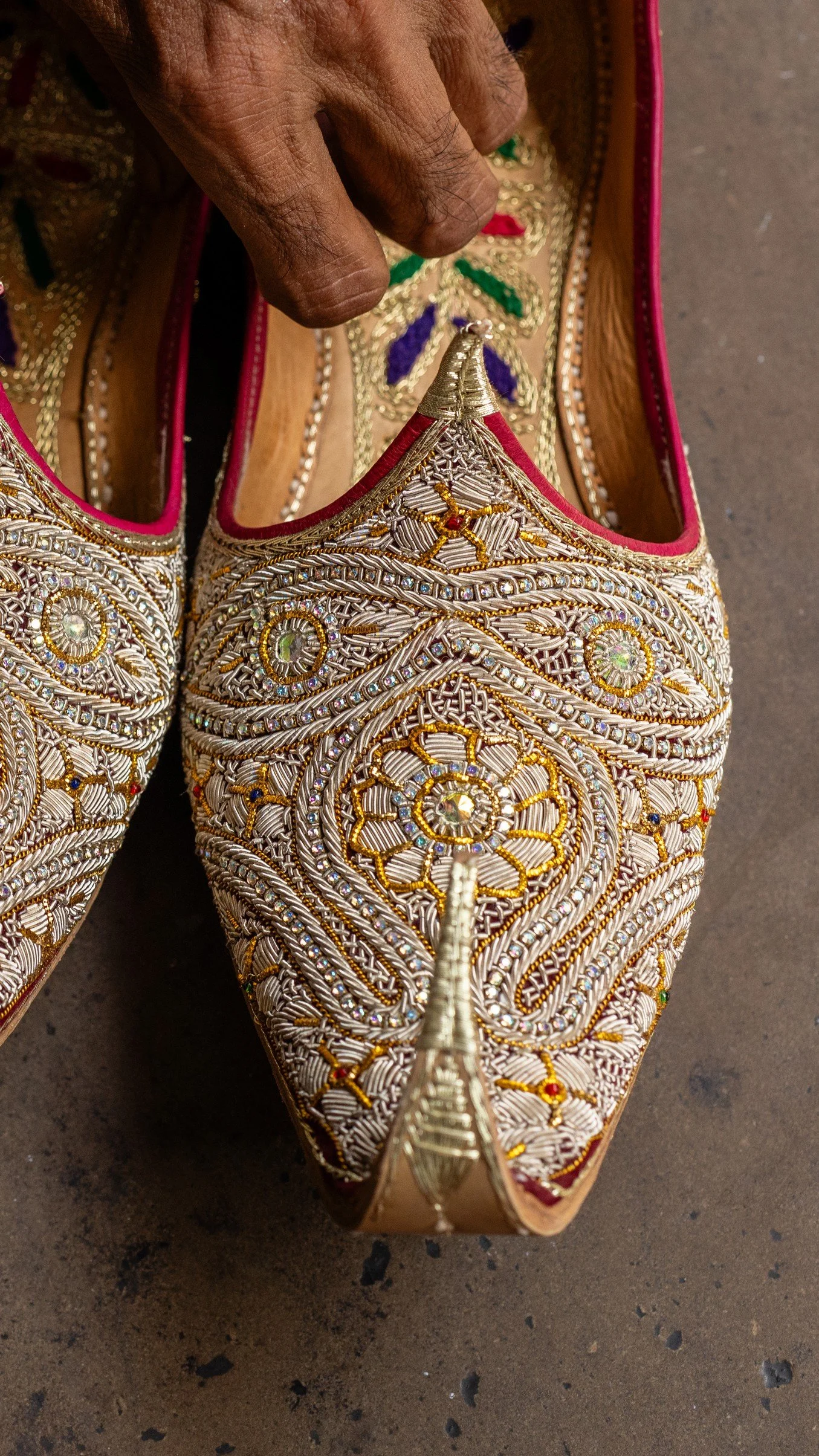
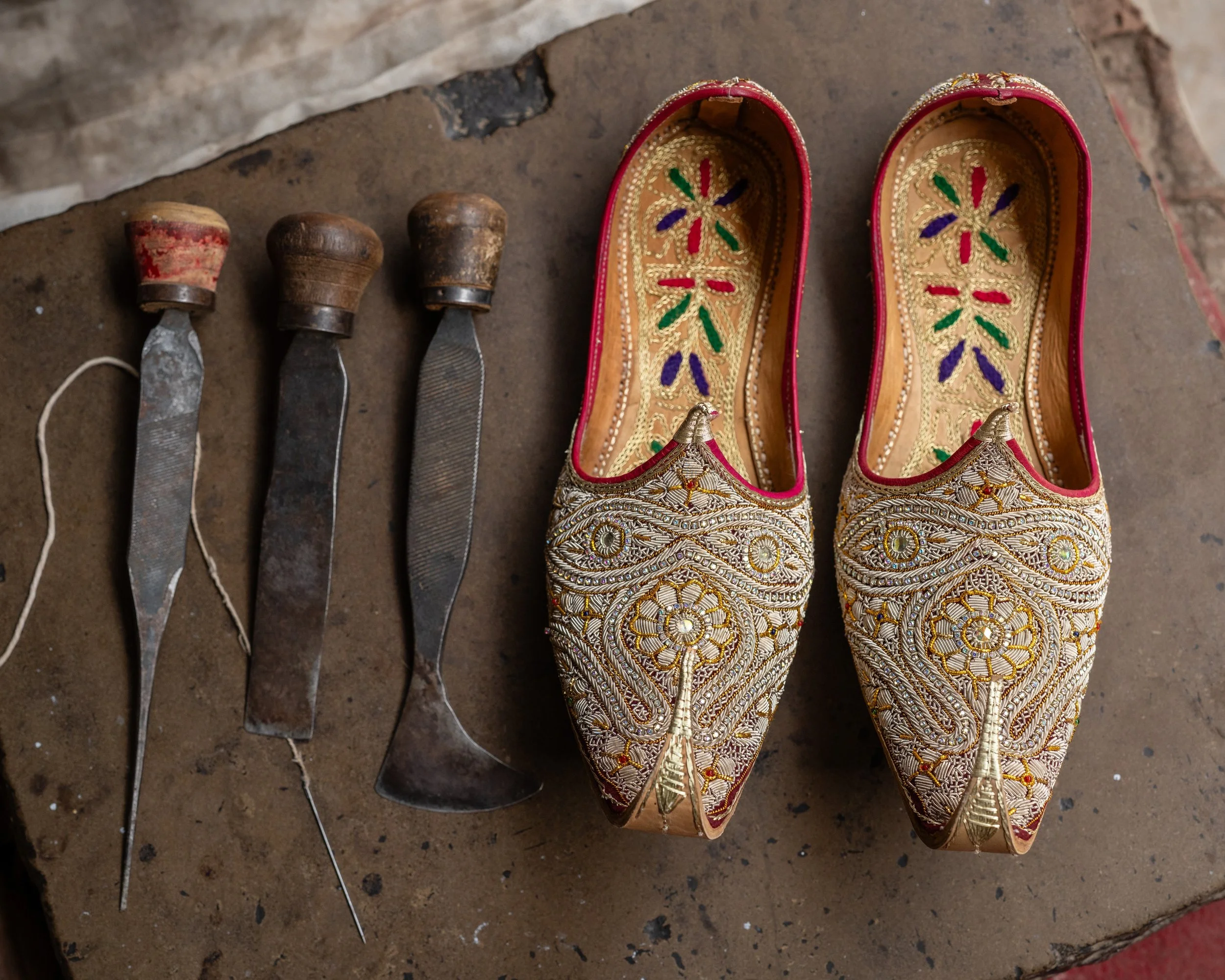
For centuries across South Asia, the khussa has been far more than everyday footwear. Born from royal Mughal courts and celebrated in regional folklore, the traditional khussa is an entirely handmade leather shoe characterized by its closed, often upturned toe, flat sole, and intricate ornamentation. It carries a legacy of distinction, designed without left or right distinction until worn and shaped naturally by the wearer’s foot.
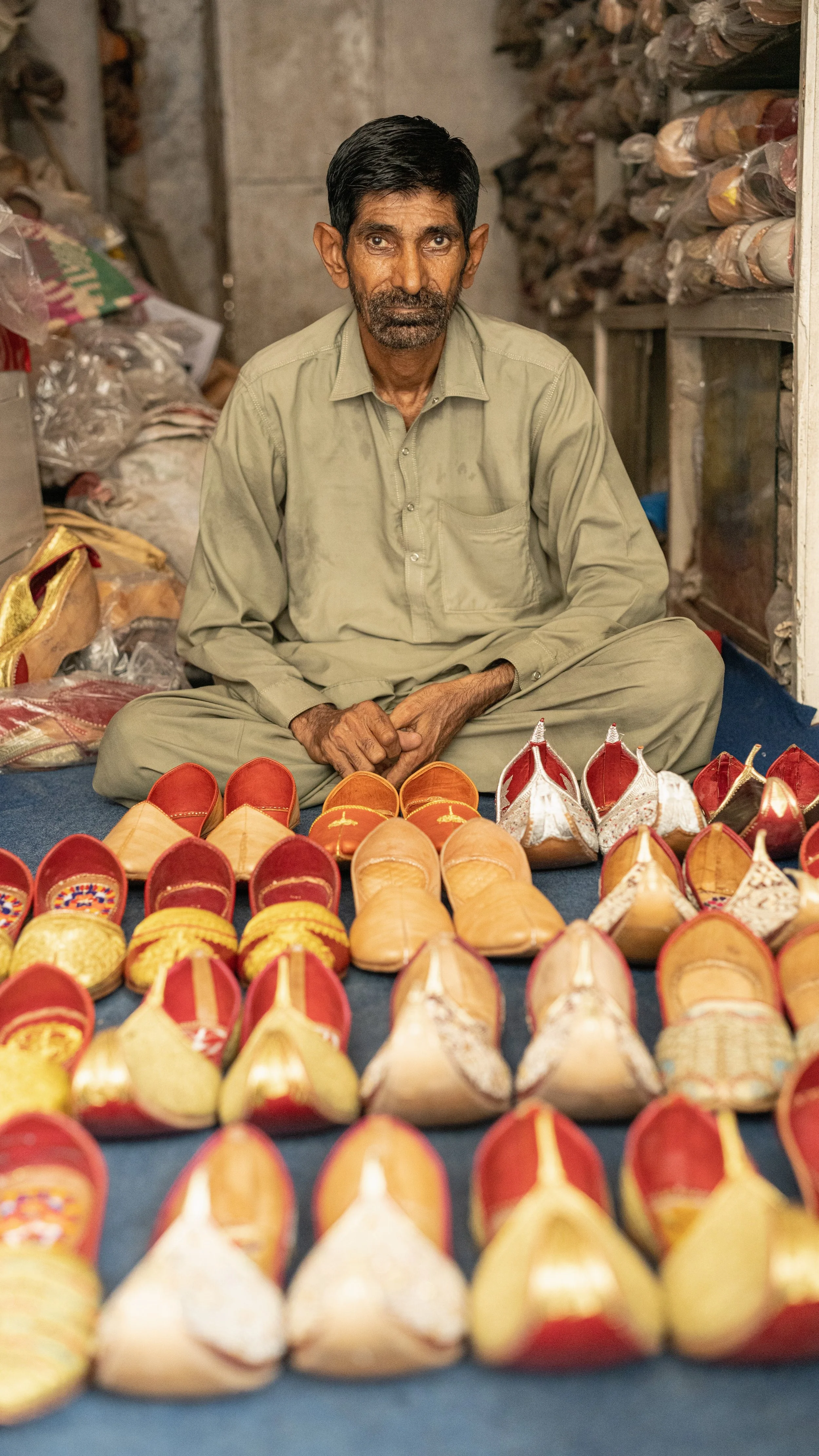
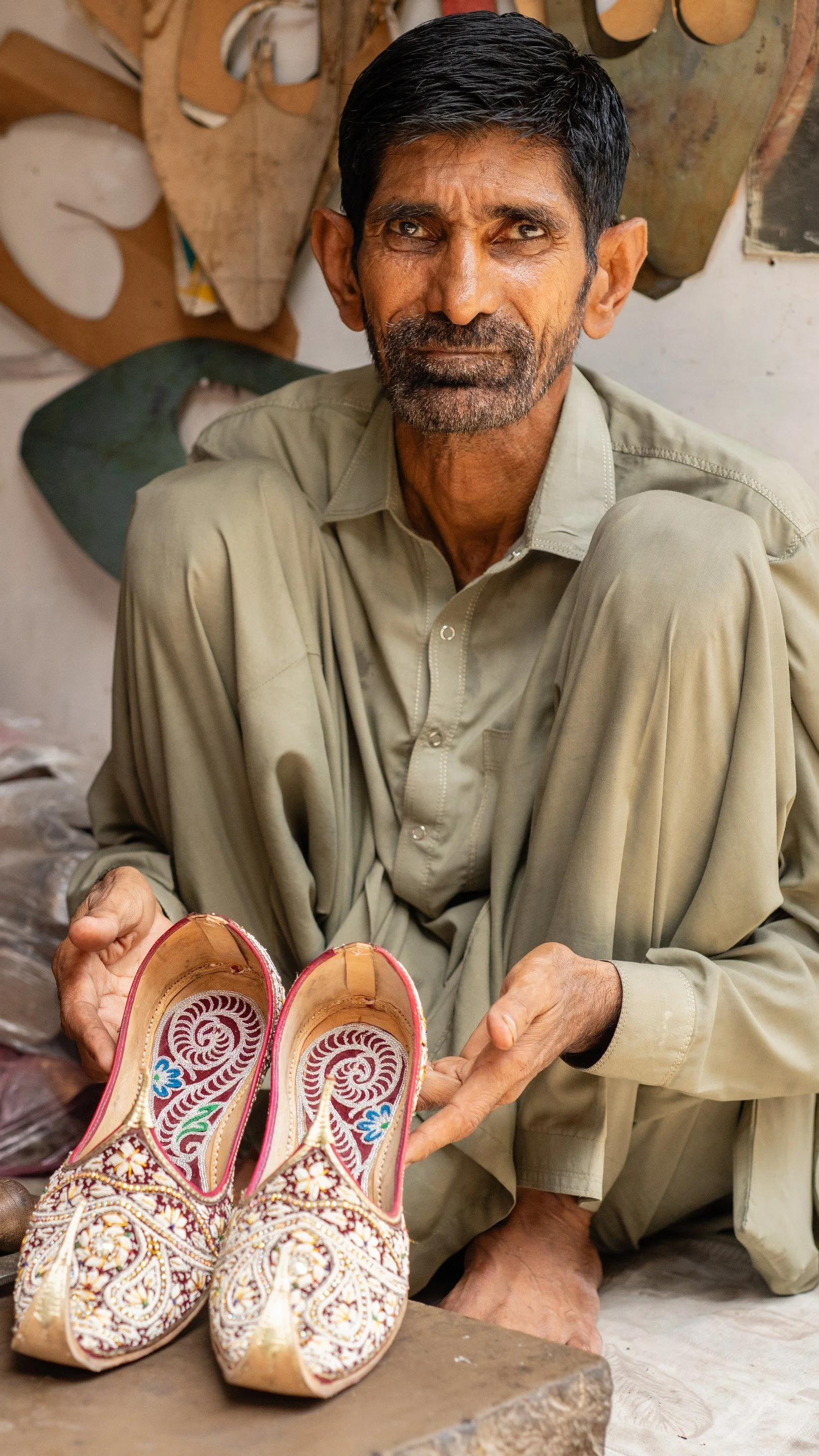
Stepping into Bhatti sahab’s modest shop feels like stepping into a sanctuary of an endangered art. He has been running his workshop right here for over 35 years, having spent a decade before that mastering the trade under old-school ustads. As he cradled his work, he spoke with immense pride about the discipline required to make a genuine pair.
Unlike modern factory-made shoes made from synthetic sheets and plastics, an authentic Multani khussa begins with desi chamra: pure, vegetable-tanned leather. Bhatti sahab walked me through the grueling preparation: raw hides are soaked in water, treated with natural oils, hand-dyed, stretched, and repeatedly beaten until the leather becomes supple enough to fold like cloth. This breathable, natural leather keeps feet cool during blistering Multani summers and warm in winter, sparing the wearer the discomfort of synthetic shoes.
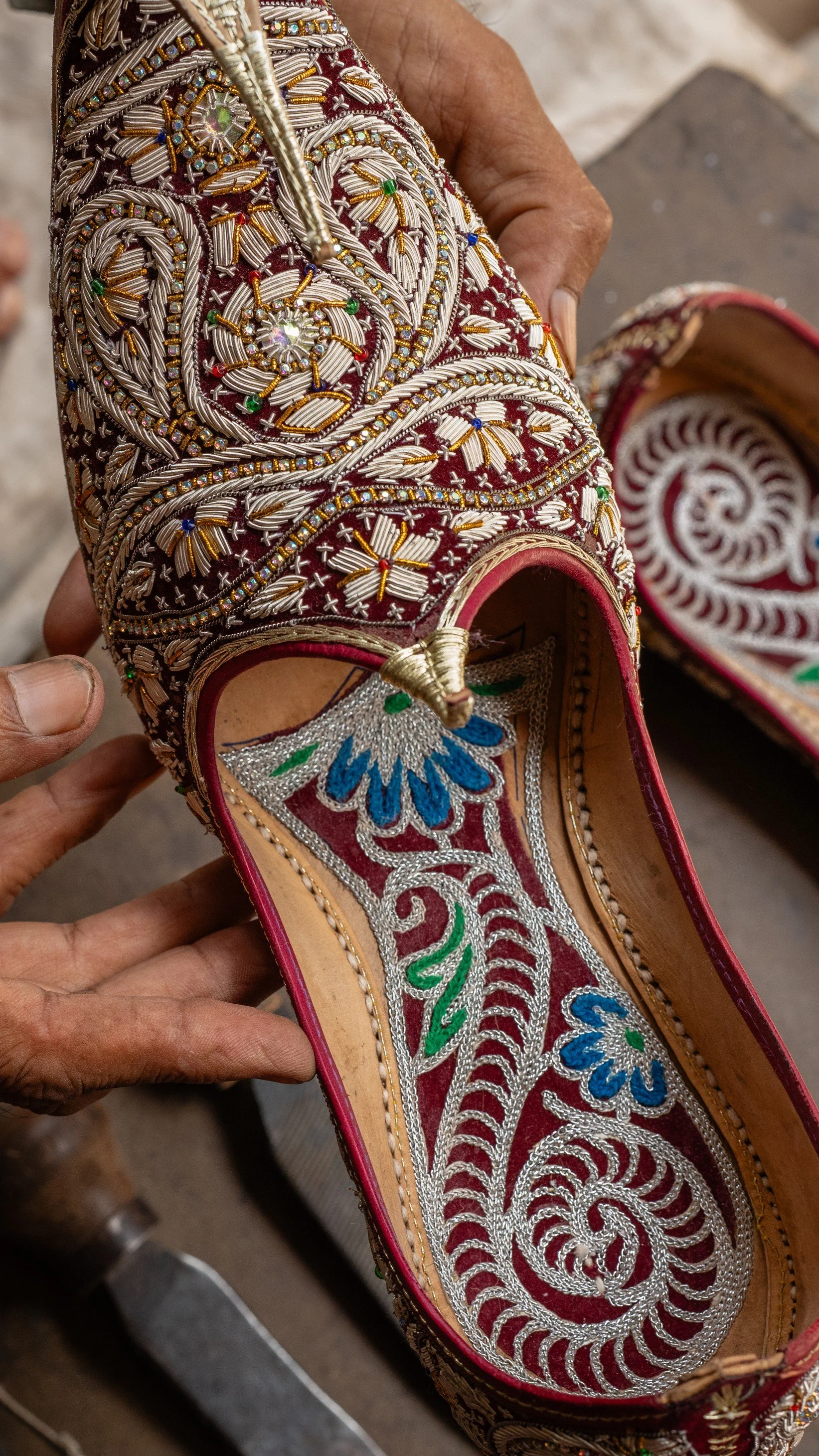
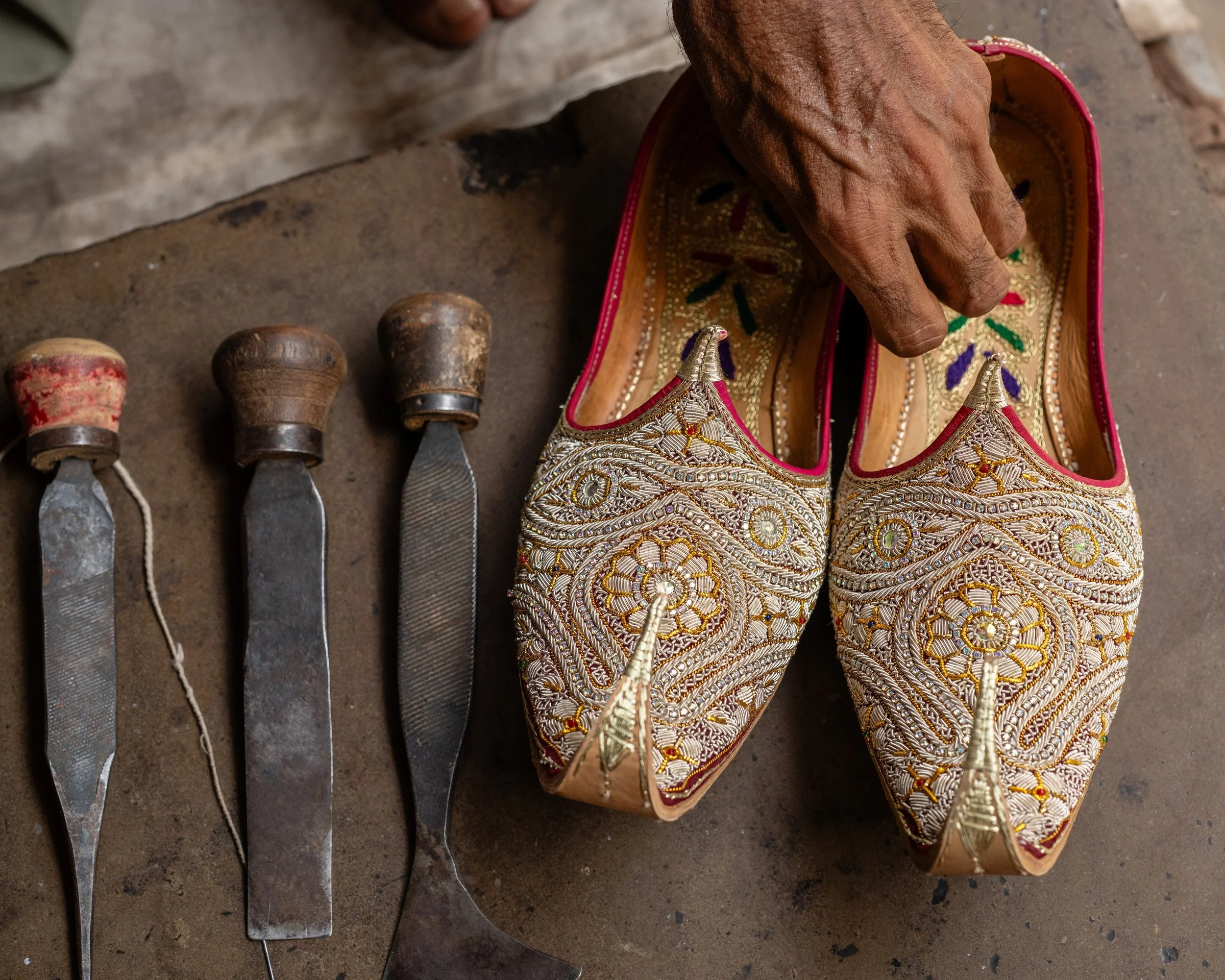
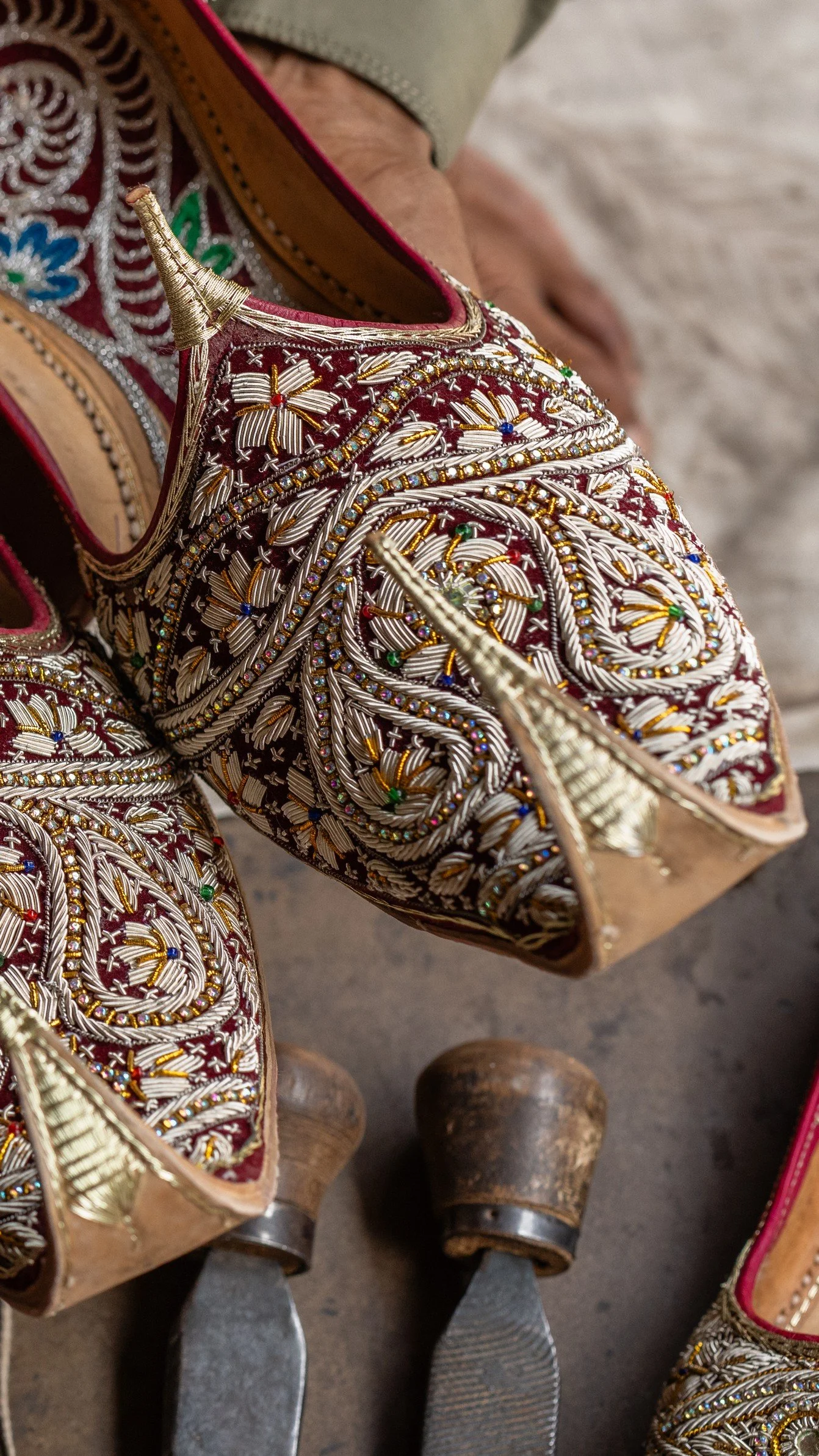
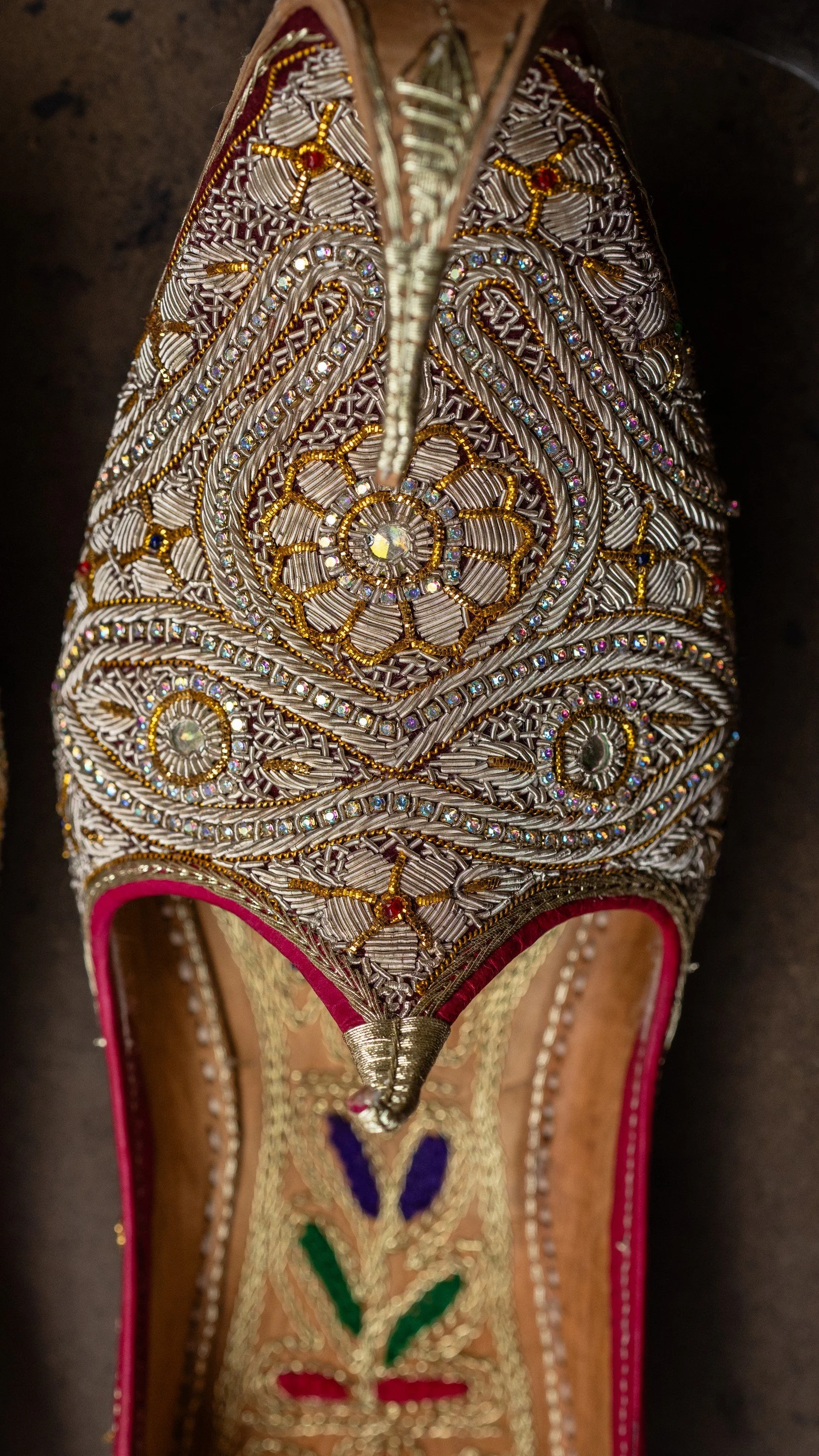
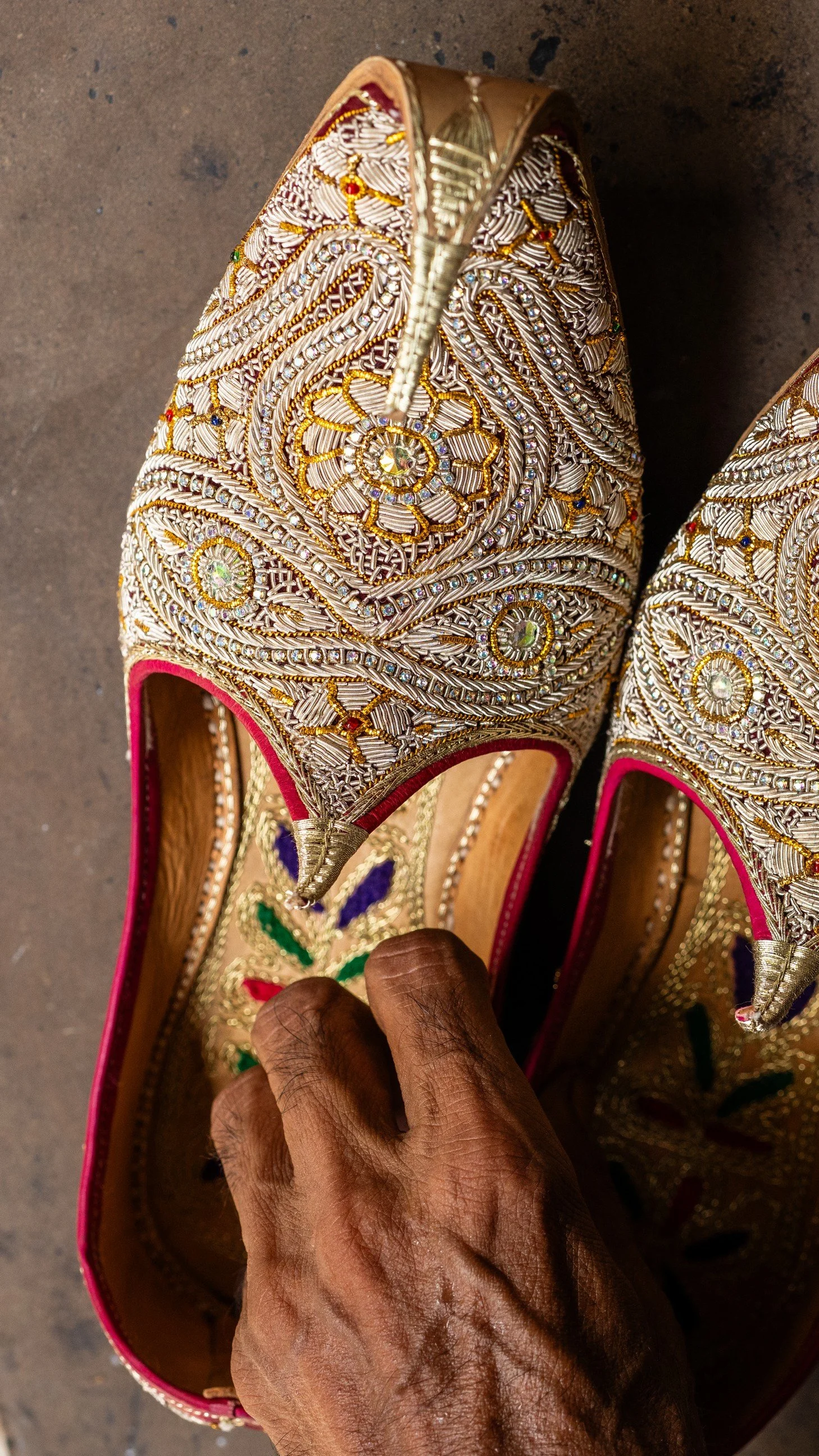
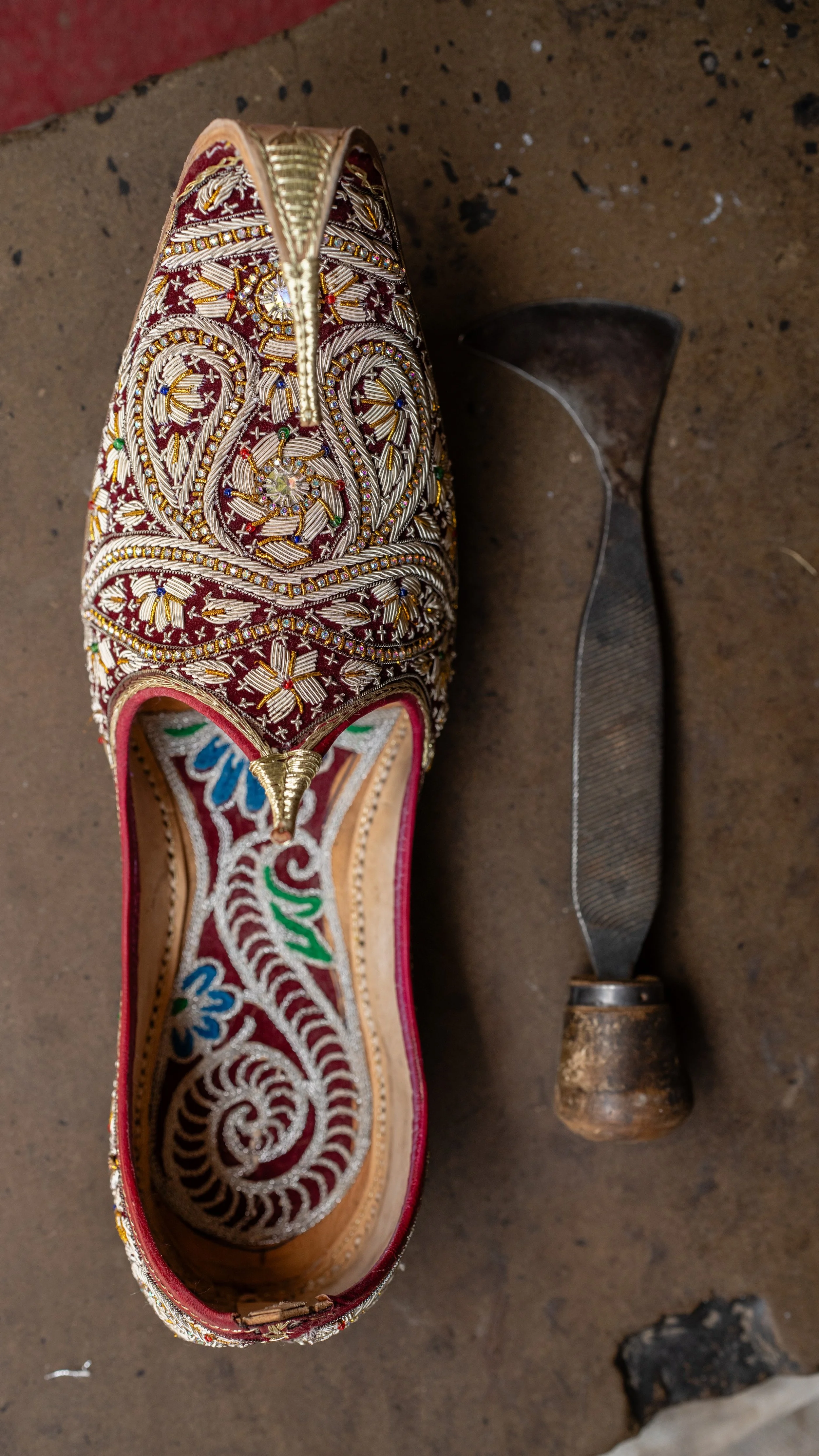
Then comes the embroidery. Using fine metallic tilla (gold and silver wire) and traditional ari needlework, artisans spend weeks hand-stitching intricate floral and geometric motifs onto the uppers. For his finest ceremonial pieces, the leather travels to skilled artisans in surrounding rural towns like Uch Sharif and Muzaffargarh, taking up to two full months of dedicated handiwork to complete just one pair.
Yet beneath the dazzling gold thread lies a poignant reality. Bhatti sahab shared how rapidly this heritage is fading. With the flood of cheap, machine-made footwear and buyers unwilling to pay for master craftsmanship, fewer than a handful of true artisans remain in the region. Young apprentices no longer enter the trade, and Bhatti sahab, now living alone at his shop following the passing of his wife—worries there will be no one left to hold the needle once this elder generation is gone. Mid-conversation, he broke softly into a soulful regional folk tune celebrating the Multani khussa, his voice carrying the warmth and weight of a lifetime devoted to his craft.
Some photographs capturing Bhatti sahab at his workbench, his historic tools, and the exquisite detailing of his khussas are included below. I will also be producing a full-length documentary film on this shoot down the line to share the complete, uncut interview and let his story unfold in full depth.
Documenting masters like Bhatti sahab reminds us why we carry cameras into the world: to preserve the dignity of rare artisans before their songs fade into memory.
How can we do a better job of preserving and patronizing generational crafts like handmade leatherwork before they vanish completely?
Bhatti sahab can be contacted at: +923006322960