Qulfi Wala (قلفی والا , ਕੁਲਫੀ ਵਾਲਾ)in Punjab
Qulfi Wala is a street vendor who sells qulfi. As a child, the scream of “Khoey Aali” in Punjabi (کھوے آلی, ਖੋਏ ਆਲੀ) meant that we asked our grandmother or mother for 50 paisas or 1 rupee and ran into the narrow streets outside to buy qulfi. Streets and houses where Hindus, Muslims, and Sikhs lived together before the 1947 partition. My grandmother lived in a house next to an abandoned Gurdwara (Sikh Temple).
Qulfi is made with condensed milk, and that’s why the qulfi wala shouted out loud, “khoey aali” to remind us that qulfi made with condensed milk is outside for you to buy. Qulfi (also spelled Kulfi) is a traditional South Asian frozen dairy dessert, frequently described as "traditional ice cream." It is created by slow-cooking whole milk for hours until the sugars caramelize and the liquid thickens, then flavoring it with rich ingredients like crushed pistachios, cardamom, saffron, rose water, or fruit purees like mango. The mixture is then poured into specialized conical metal molds called sanchas or earthen pots called matkas and frozen solid. Because qulfi is not whipped during the freezing process, it lacks the air pockets found in Western ice cream, resulting in a distinctively dense, creamy texture that melts much more slowly in the heat.
I remember stealing my grandmother’s money to buy qulfi and hiding with my sister in a small storeroom where our grandmother kept dried wood to make fire for her huqa and also food. She once caught me as well, laughed out loud, told my chacha, and they both smiled. Her house was once owned by Sikhs and had big, solid brick walls painted in traditional yellow.
I also have a vivid memory of eating more than ten or fifteen kulfis in one go. Our father took us to a village with his friend. While we were parked alongside a small canal, a kulfi seller was passing by on his bicycle, traveling from the village to a nearby town to sell kulfis. My siblings and I enjoyed it so much that the seller ran out of kulfis and happily returned home, having sold out for the day. I remember my father taking out his brown wallet and giving the seller some money. In that moment, I felt like my dad was rich, as he handed over a large amount of money; more than the kulfi seller needed. The seller was a humble man and didn't specify an amount; he simply said in Punjabi, “Tuhadi marzi” (pay me whatever you wish).
In Punjabi culture, qulfi is deeply intertwined with community life, summer nostalgia, and childhood joy. The qulfi wala (vendor) is a highly anticipated and beloved neighborhood figure, traditionally pushing a wooden cart equipped with a large, insulated earthen pot packed with a mixture of ice and salt to keep the treats frozen in the sweltering heat.
These images of the qulfi wala below were taking near Dehli Gate in Lahore.
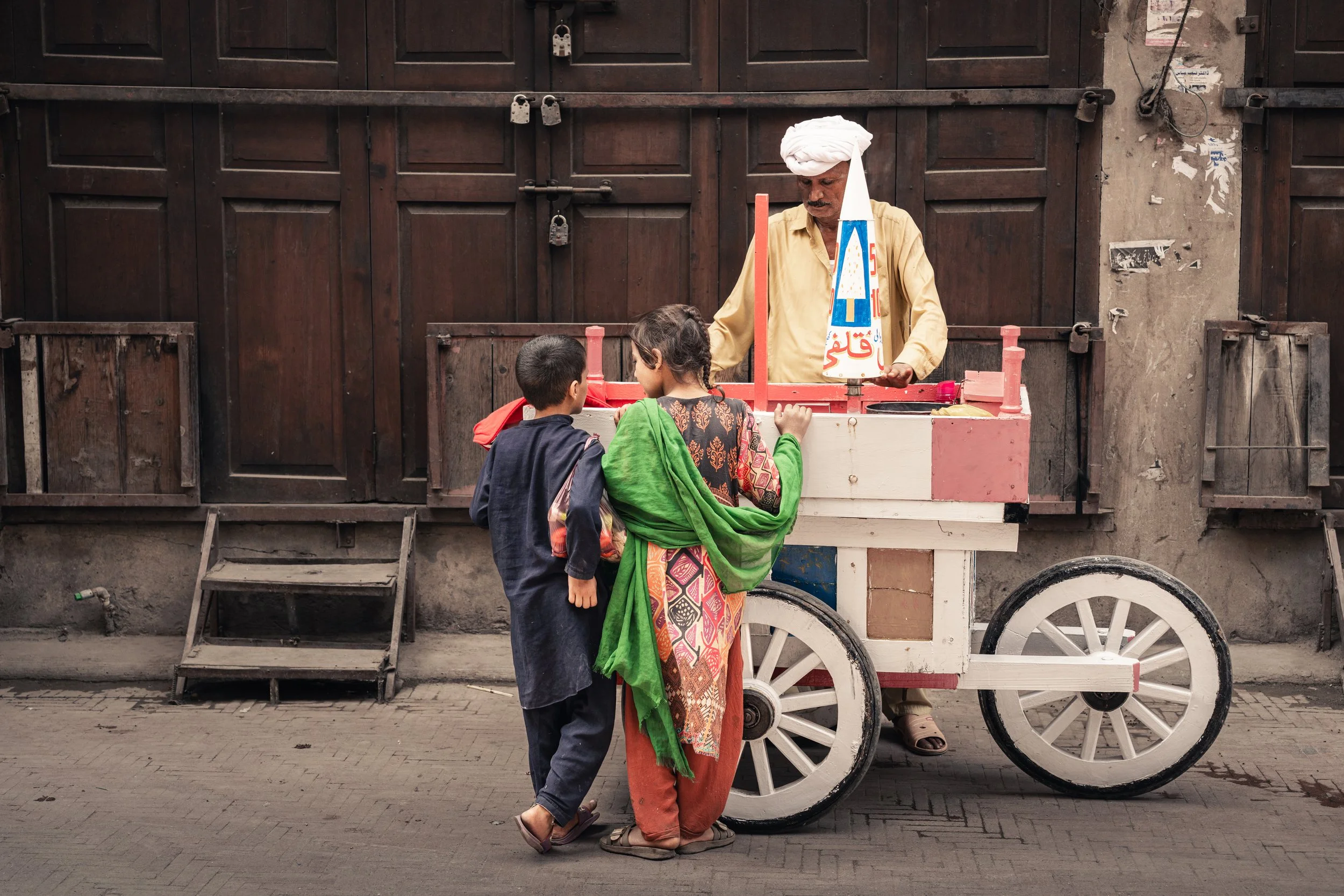
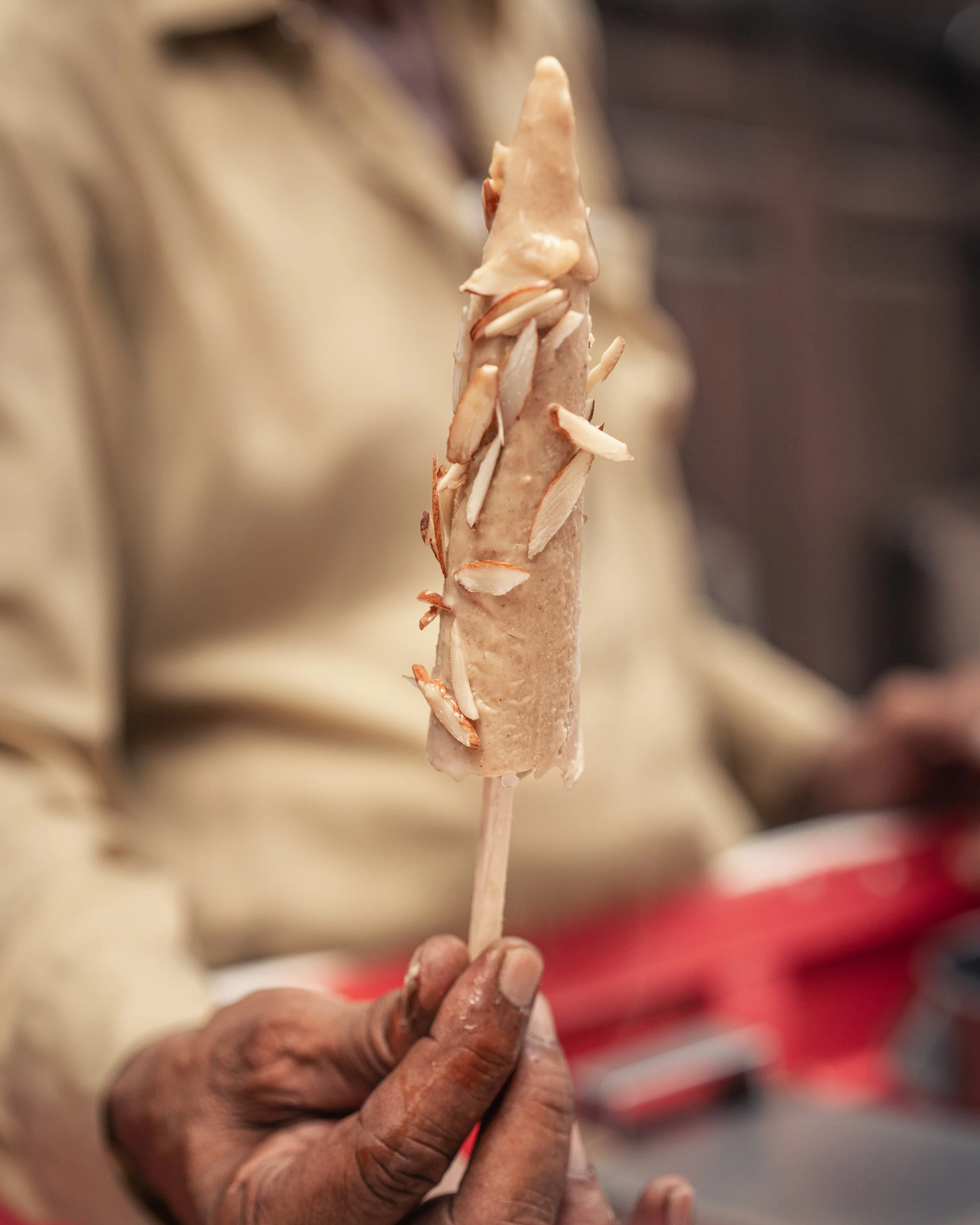
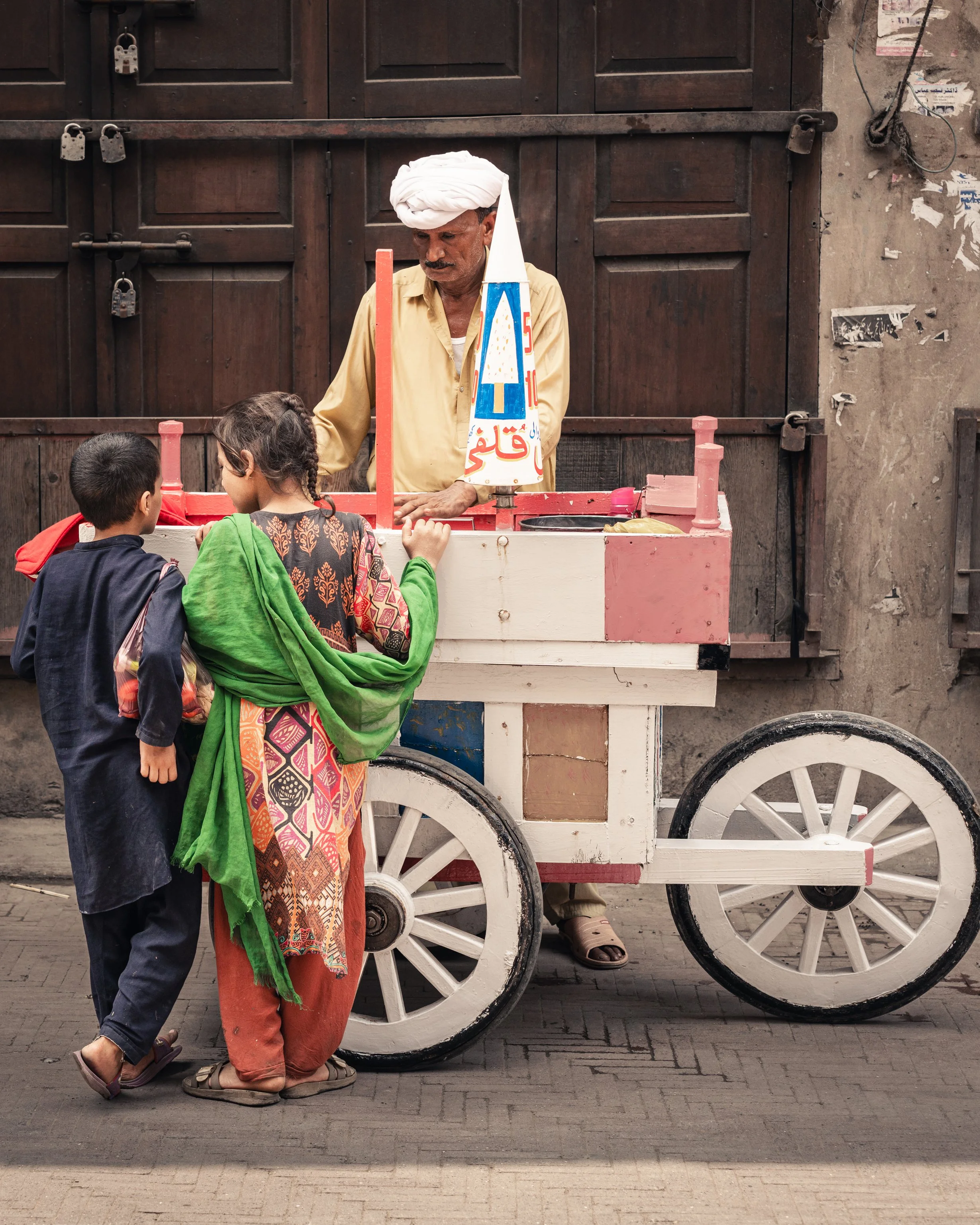
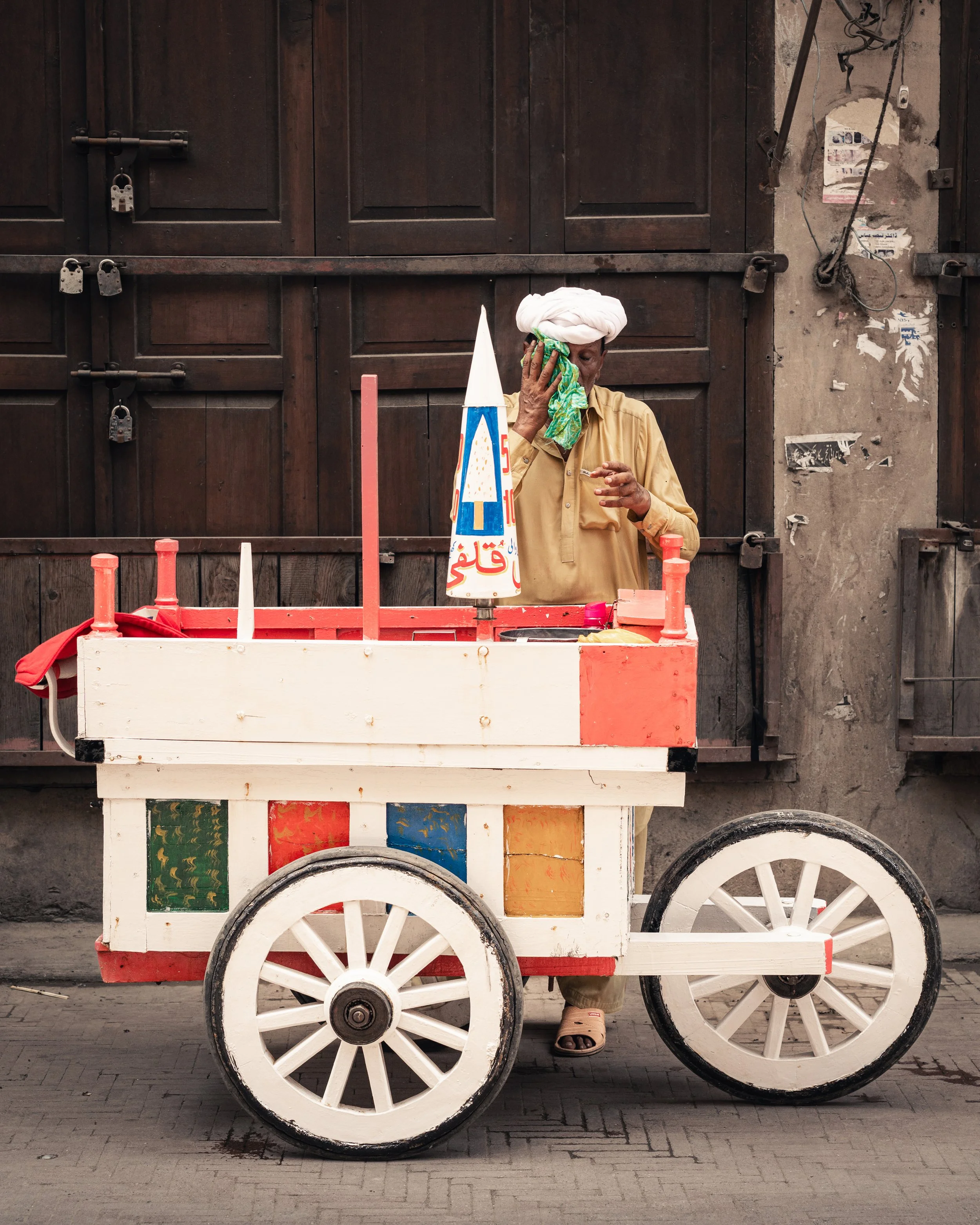
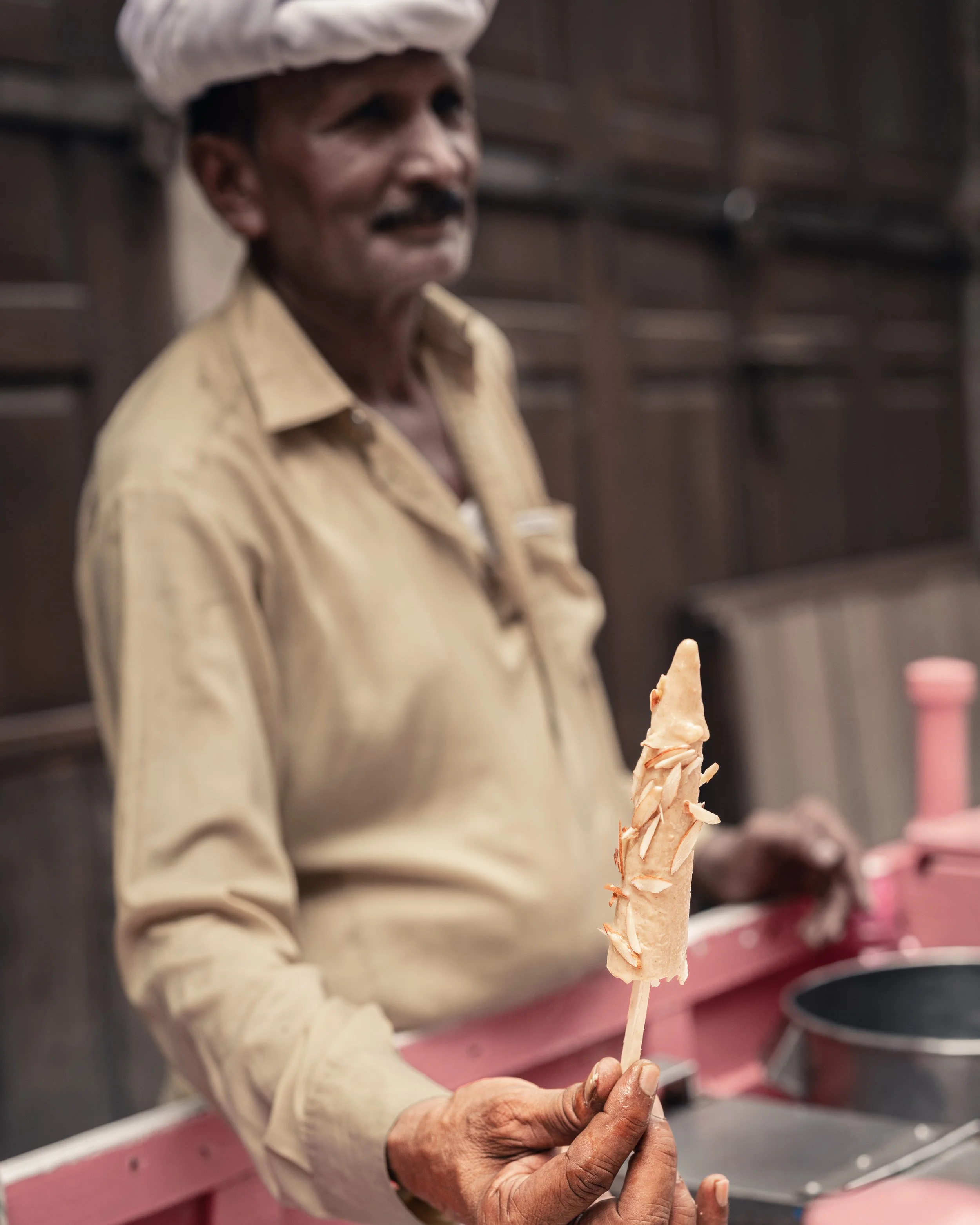
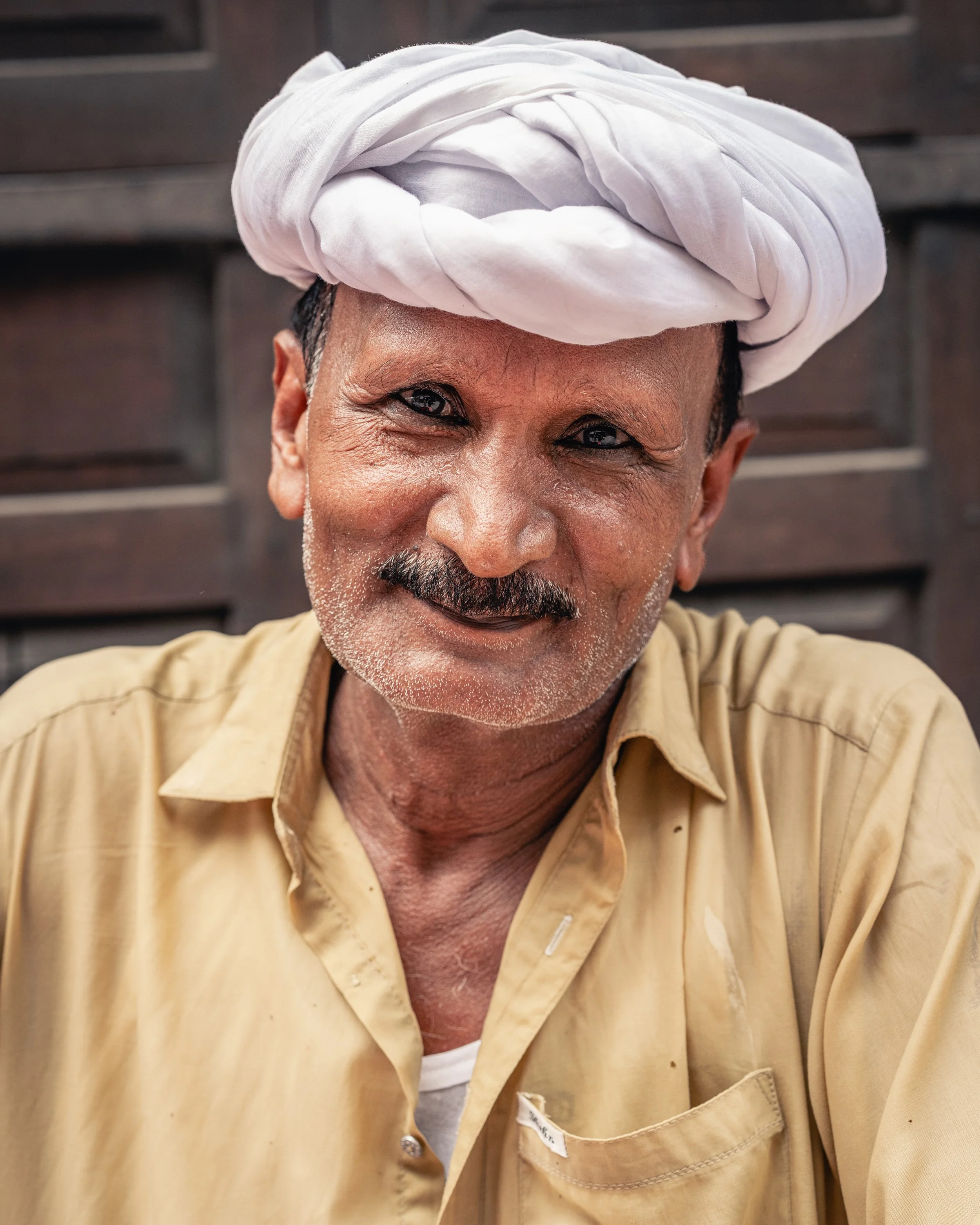
For generations, Punjabi children have eagerly responded to the sound of the vendor's ringing bell or distinctive call on hot summer afternoons. Kids rush out of their homes, often clutching small coins, to gather around the cart. Pulling a cold metal mold from the icy depths and briefly running it under water to release the dense, sweet cone onto a wooden stick or a fresh leaf is a ritual in itself. This treat is a shared, communal experience and a staple of the rich, dairy-heavy culinary traditions of the Punjab region. Even now, in my 40s, the sound echoes in my ears, and whenever I hear it, I can't resist the urge to run out and buy some.
I will be uploading a behind-the-scenes video of this qulfi wala on my Instagram @muji.drifts soon. Watch this space.
Kind regards
Muji