The Kalai Connection: An Antique Cup's Journey Between Pakistan and India (قلعی / कलई)
They say if you haven’t seen Lahore, you haven’t truly been born. The Walled City, with its narrow, chaotic alleys and sun-drenched dust, is a place that breathes history.
Recently, I was wandering through the famous Kasera Bazaar, the brass and copper market, with a very specific mission. I was hunting for a gift for a dear friend across the border, my Indian friend Shailee, who I lovingly call Bhabi.
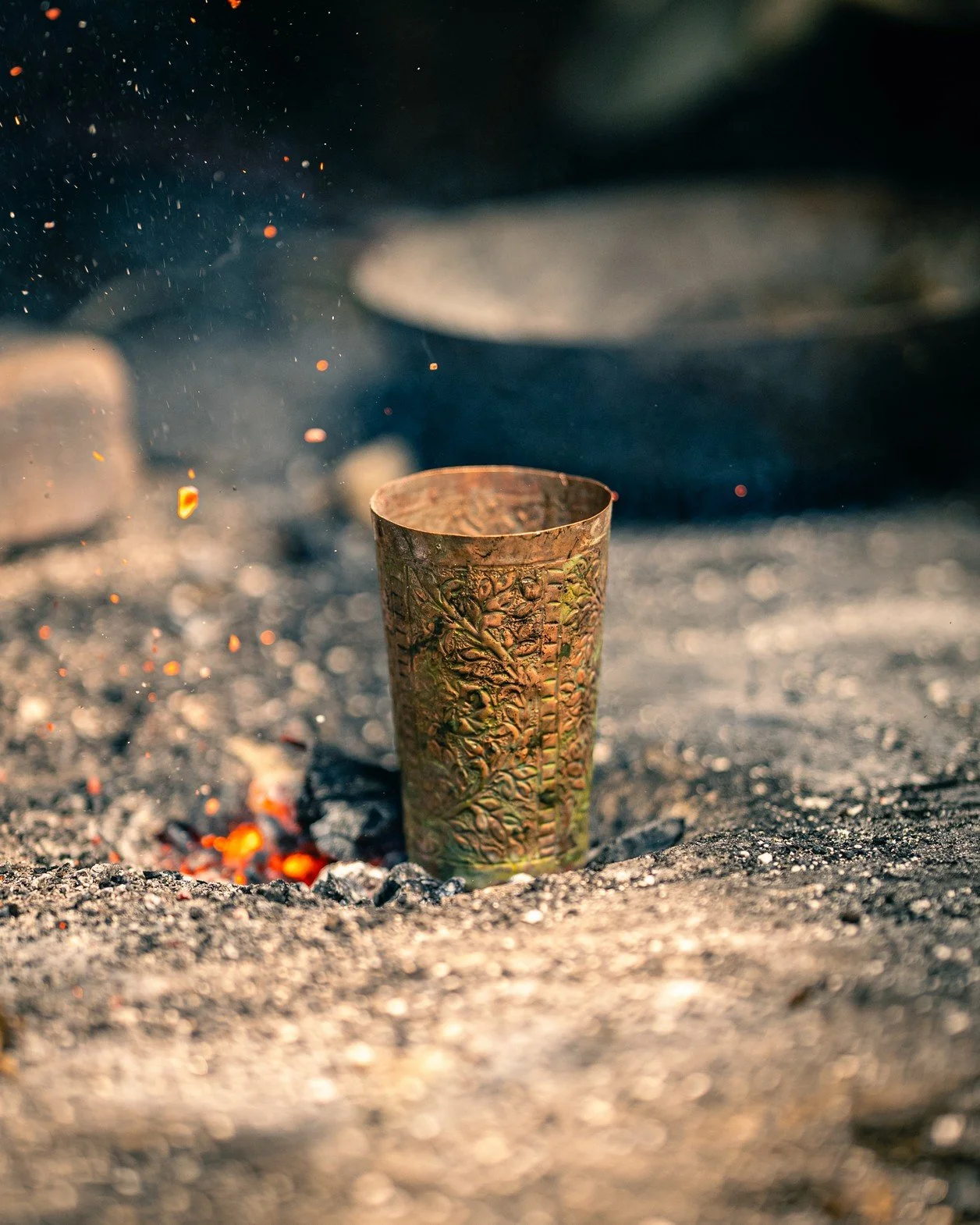
After weaving through the crowds and gleaming storefronts, I ended up at a shop near an old Mandir and found exactly what I was looking for: a beautifully engraved, antique copper cup. It was stunning, but there was a catch. If you actually want to drink from traditional copper or brass, it needs a little preparation first. It needs a traditional tinning process known as kalai (قلعی / कलई).

A copper cup/glass I bought from Kasera Bazaar in Walled City of Lahore ( کسیرہ بازار - Androon Lahore)
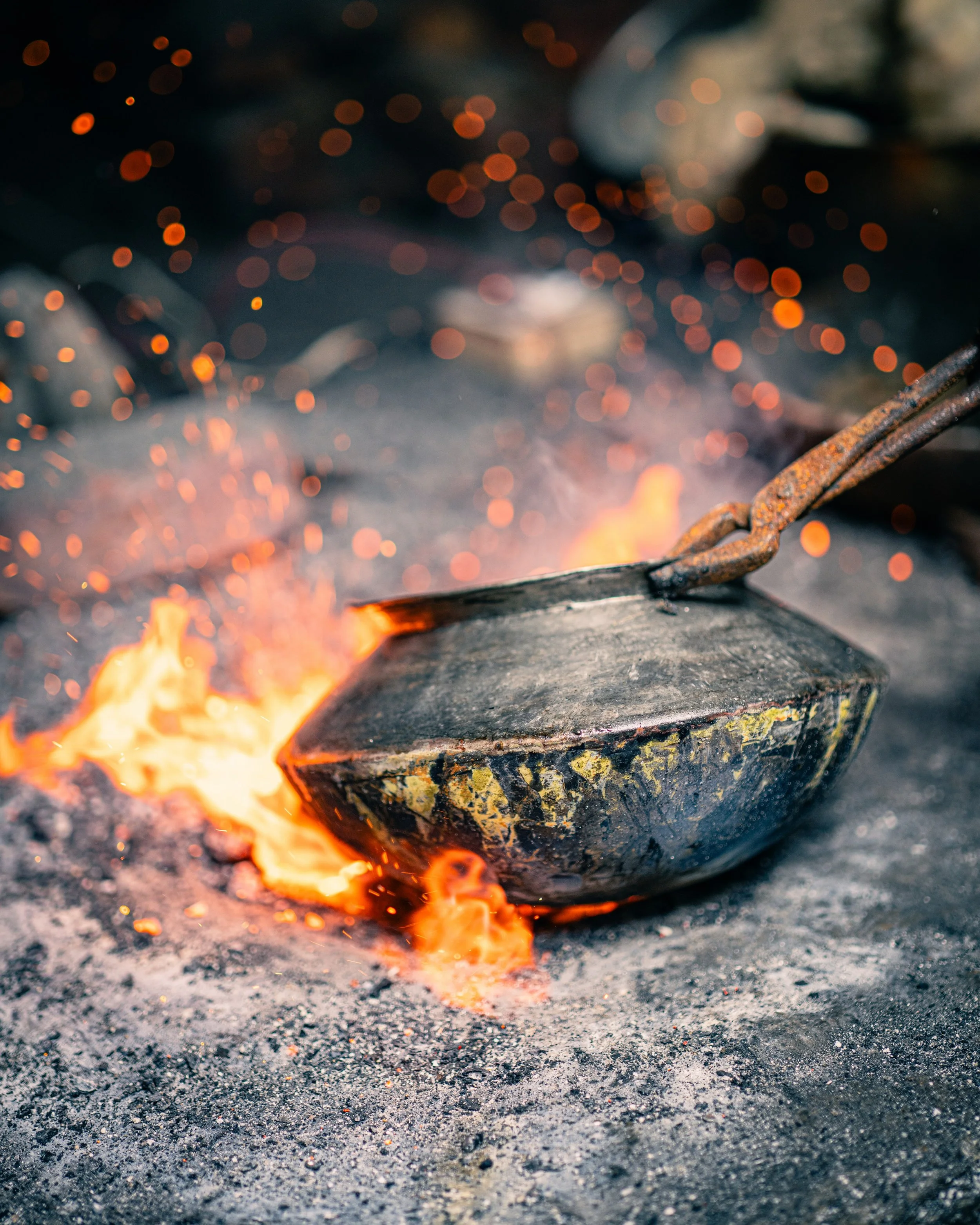
Because raw copper can react with certain liquids, artisans coat the inside of the vessels with pure tin. It’s an ancient craft, and finding a true kalai wala feels like stepping back in time. I took the cup to a 7th-generation artisan working out of a dark, soot-stained workshop. As a visual storyteller, sitting there with my camera was incredible; the contrast between the deep, moody shadows of the alleyway and the bright, explosive orange sparks of the forge was entirely mesmerizing.
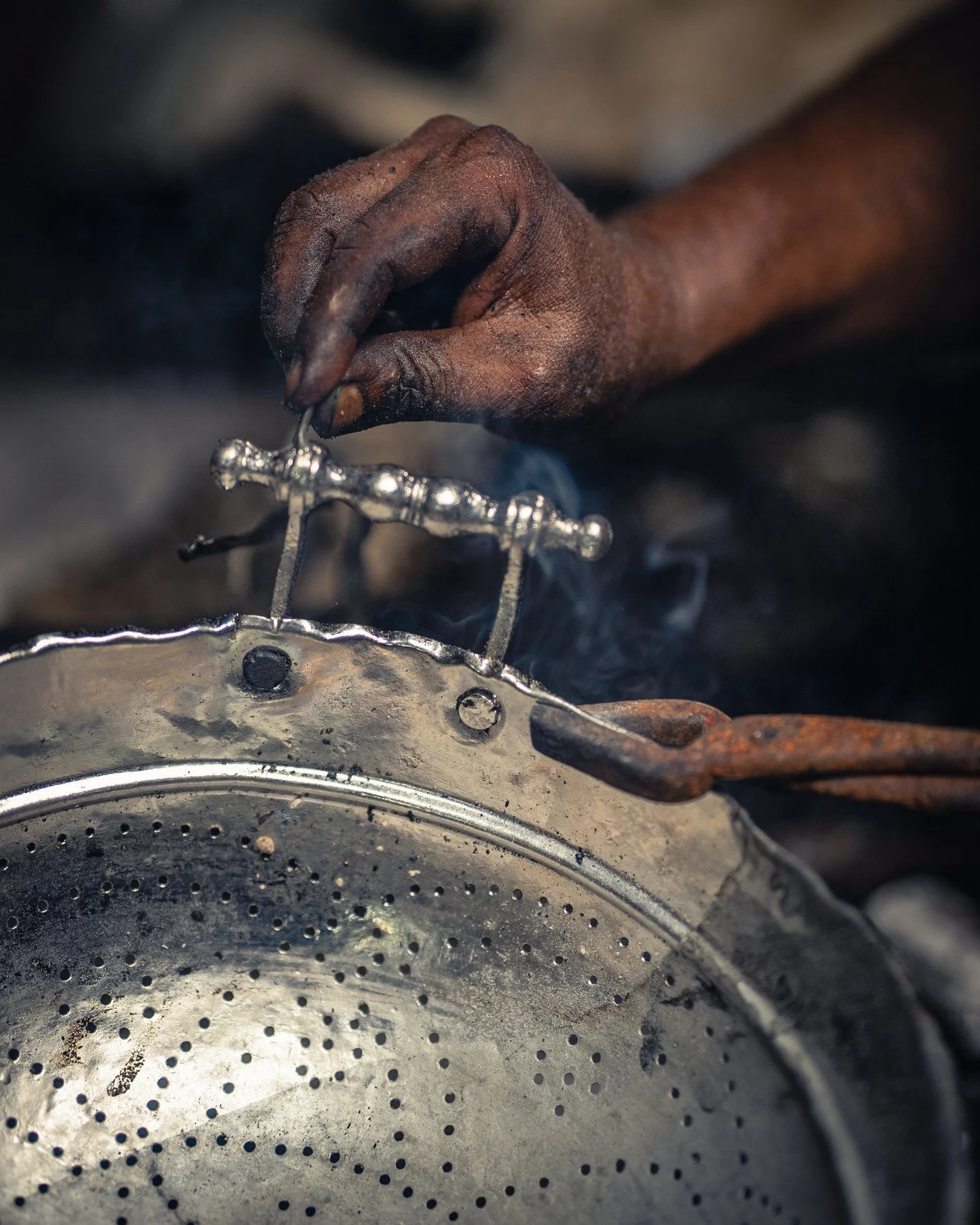
The artisan buried the cup in the glowing coals. Once it was superheated, he applied a flux called naushadar (sal ammoniac), sending up thick clouds of white smoke. He then touched a stick of pure tin to the heated metal and rapidly wiped it around the inside with a cotton pad. In mere seconds, the dull copper cup transformed into a brilliant, gleaming silver mirror from the inside.

The process of kalai (قلعی / कलई)
But here is where the story gets really beautiful.
As the artisan was wiping down the newly tinned cup, he paused, smiled, and looked up at me. "Brother," he said, "this cup... it's originally from India."
I couldn't help but smile at the absolute poetry of it. An Indian antique, sitting in a bustling Pakistani bazaar, restored by the hands of a Pakistani artisan, just to be boxed up and sent right back home to India.
Sometimes, the politics of our nations are so incredibly loud. But down in the alleys of the bazaar, surrounded by the hiss of the forge and the shared memories of street hawkers yelling "Pande kali karalo!", you realize the people just want to share a cup of tea.
Shailee Bhabi, this cup has lived a lifetime on both sides of the line. I hope the next time you drink from it, you taste the love from Lahore.
Below are images from Mr. Abid’s workshop and the Kalai-making process in Kasera Bazar, Lahore, Pakistan.